

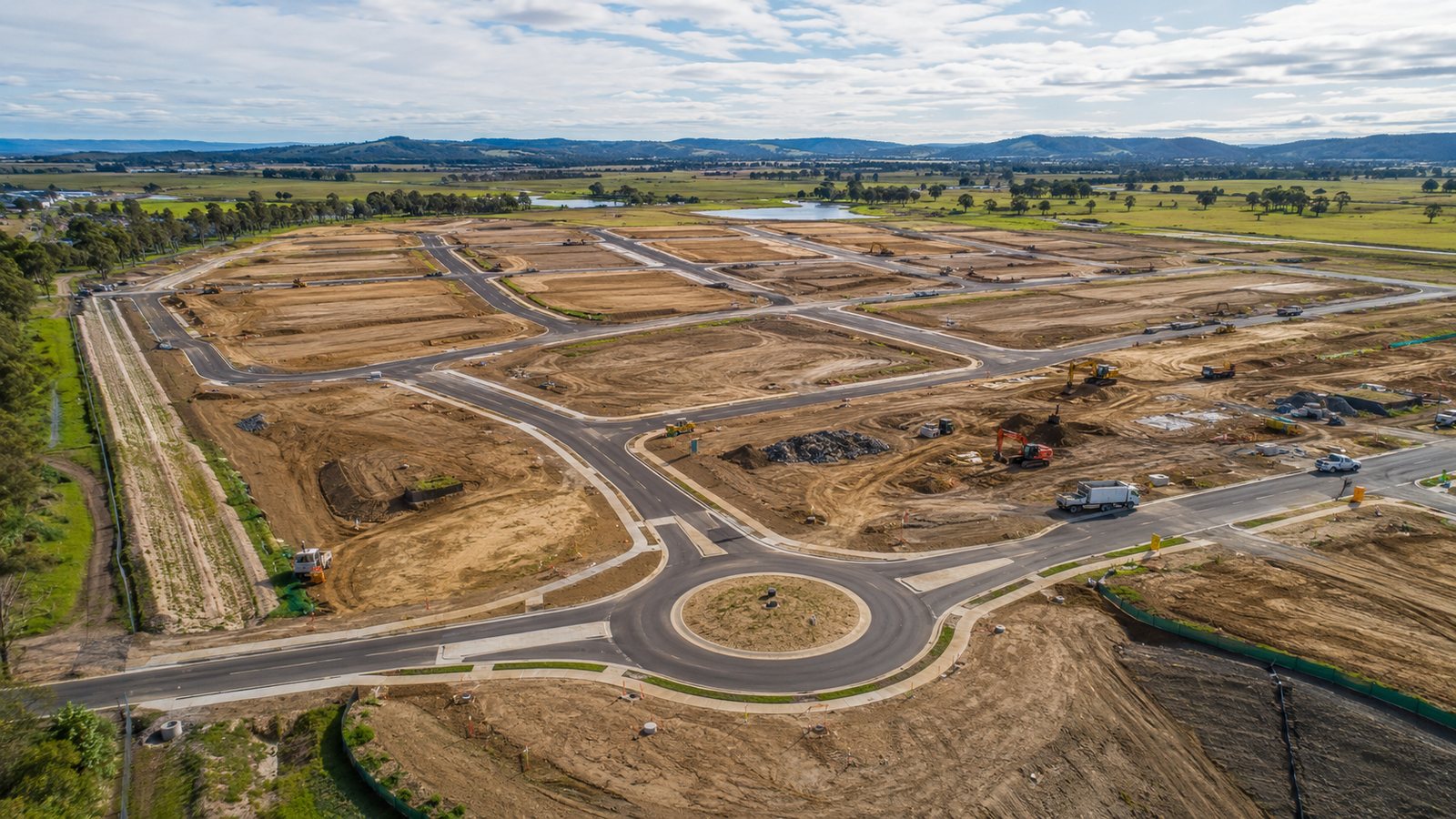

A subdivision lender is not simply taking security over vacant land. It is funding a sequence of planning, engineering, civil construction, authority approvals, title creation, marketing and lot settlements. The loan may need to support the project for months or years before individual titles are registered and sale proceeds become available.
The lender must therefore be satisfied that the project can move from its current condition to completed, saleable lots and that the facility can be progressively repaid without leaving the project short of working capital.
For the developer, the challenge is not only obtaining enough debt. The facility must also be structured around the timing of civil works, development contributions, authority payments, stage completion, plan sealing or subdivision certification, title registration and lot settlements.
A loan that appears adequate in total can still create a cash-flow problem if:
the lender requires the developer's equity to be spent too early;
drawdowns do not align with large civil contractor claims;
presales settle later than expected;
release prices consume too much of each settlement;
sale proceeds cannot be recycled into the next stage;
title registration is delayed while interest continues to accrue; or
the facility reaches its limit before the final stage is completed.
This guide explains how land subdivision finance works in Australia, what lenders assess, how staged facilities and lot releases operate, which documents are required and how developers can improve the financeability of a subdivision project.
What Is Land Subdivision Finance?
Land subdivision finance is funding provided to acquire, refinance, develop or complete land that will be divided into multiple legal lots.
Depending on the project, the facility may fund:
the acquisition or refinance of the parent parcel;
planning and development approval costs;
engineering and survey work;
demolition, clearing and site preparation;
bulk earthworks;
roads, drainage and retaining structures;
water, sewer, electricity and telecommunications infrastructure;
development contributions and authority charges;
civil construction costs;
professional fees and project management;
marketing and selling expenses;
capitalised interest and lender fees; and
contingency and cost-overrun allowances.
The completed product may be residential lots, industrial lots, commercial lots, rural-residential lots or a mixture of uses.
Some projects involve a simple one-into-two subdivision with limited physical works. Others involve hundreds of lots delivered over multiple stages, substantial trunk infrastructure, environmental approvals and a long sales programme.
The funding structure must match the scale, complexity and duration of the project.
How Subdivision Finance Differs from a Standard Property Loan
A standard property loan is generally assessed against an existing asset and an identifiable source of repayment, such as rent, business income or the sale of the whole property.
Subdivision finance involves additional risks.
The security changes during the project
The lender begins with a mortgage over the original parcel. As the subdivision progresses, new lots are created and sold. The lender must release individual lots from its mortgage while preserving sufficient security and repayment coverage over the remaining land.
The project creates value progressively
A raw or unserviced site may be worth significantly less than the completed titled lots. Value is created through approvals, infrastructure, civil works, servicing, title registration and market acceptance.
The exit occurs through multiple settlements
Instead of one sale or refinance, repayment may depend on dozens or hundreds of lot settlements. The lender assesses the sales rate, contract quality, settlement risk and the amount of debt repaid from each lot.
Cash flow can be uneven
Civil contractors, councils and service authorities may require large payments before any lot settles. Interest and holding costs continue while the developer waits for plan sealing, compliance approval and title registration.
The programme is exposed to several approval processes
Planning approval alone may not be enough to start or complete the work. Engineering approvals, operational works approvals, service authority agreements, environmental conditions, road-opening approvals, plan sealing or subdivision certification and title registration may all affect the programme.
Staging affects both risk and finance
A large subdivision is often delivered in stages to reduce capital exposure and align supply with buyer demand. However, later stages may depend on infrastructure constructed in an earlier stage, and the lender may retain security over future stages until agreed debt-reduction targets are achieved.
Types of Land Subdivision Projects
Small infill subdivision
A small infill project may divide one residential parcel into two, three or several lots. The works may involve demolition, a new driveway, drainage, service connections and minor civil construction.
Although the project is smaller, the lender will still assess planning certainty, service availability, buildability, end values, project costs and the developer's ability to fund overruns.
Residential land estate
A residential estate may deliver tens or hundreds of lots over several stages. The project can require major roads, stormwater infrastructure, sewer and water upgrades, retaining walls, parks, landscaping and community facilities.
The funding structure commonly includes stage limits, sales hurdles, progressive lot releases and detailed quantity surveyor monitoring.
“Subdivision is a civil-works business with a finance problem attached.”
— The Australian Property Development Handbook
Industrial subdivision
Industrial subdivisions create serviced lots for warehouses, logistics facilities, manufacturing, trade premises or owner-occupiers.
The lender will assess lot size, access, heavy-vehicle circulation, service capacity, zoning, competing land supply, take-up rates and whether demand is being driven by owner-occupiers, developers or investors.
Commercial or mixed-use subdivision
Commercial lots may be intended for retail, medical, childcare, service stations, offices or other business uses. Demand can be more specialised, and the lender may require stronger evidence of buyer interest or tenant demand.
Rural-residential subdivision
Rural-residential projects can involve larger lots, longer service runs, bushfire requirements, on-site wastewater, road upgrades and lower sales velocity. The lender will consider the depth of the local market and the cost of servicing a dispersed development.
Strata and community-title subdivision
Strata, community-title and volumetric subdivisions may form part of a vertical development or a mixed-use project. These structures can involve common property, management statements, easements and legal documentation that must align with the lender's security and settlement strategy.
The Land Subdivision Development Lifecycle
The exact process differs between states, territories and local authorities. However, most subdivision projects pass through the following broad stages.
1. Site acquisition and preliminary due diligence
Before acquiring the land, the developer should investigate:
zoning and planning controls;
minimum lot sizes and permitted density;
flood, bushfire, contamination and environmental constraints;
topography and geotechnical conditions;
existing easements, covenants and encumbrances;
access and road requirements;
water, sewer, electricity and telecommunications capacity;
likely authority contributions;
biodiversity or vegetation issues;
heritage and cultural considerations;
market demand and competing supply; and
the likely approval and delivery programme.
Finance obtained at this stage may be an acquisition loan, land-bank facility or pre-development facility rather than a full subdivision construction loan.
2. Planning and subdivision approval
The developer seeks the approval required to create the proposed lots. The terminology differs by jurisdiction.
In Queensland, subdivision is commonly assessed as reconfiguring a lot, with separate operational works approvals often required for associated civil works. In New South Wales, the process may involve development consent, a subdivision works certificate where required and a subdivision certificate before registration. Other states use their own planning, certification and title-registration processes.
A lender will examine the approval, approved plans and every condition that may affect cost, timing, staging or title registration.
3. Detailed engineering and authority approvals
Civil engineers prepare the detailed design for roads, drainage, sewer, water, earthworks and other infrastructure. Service authorities may review and approve the proposed connections and upgrades.
The developer should reconcile the approved engineering scope with the civil contract and feasibility. A mismatch between the development approval, engineering drawings, authority requirements and contractor price is a common source of cost overruns.
4. Finance approval and conditions precedent
Once the project is sufficiently advanced, the lender issues indicative terms and then completes credit approval, valuation, legal due diligence and quantity surveyor review.
Before the first construction drawdown, the lender may require:
acceptable development and operational works approvals;
a satisfactory valuation;
an approved civil contract and cost plan;
evidence that the required equity has been contributed;
presales or sales evidence where applicable;
insurance;
project accounts and reporting arrangements;
authority agreements;
confirmation of the development entity and ownership structure;
legal review of material contracts; and
satisfaction of any project-specific conditions.
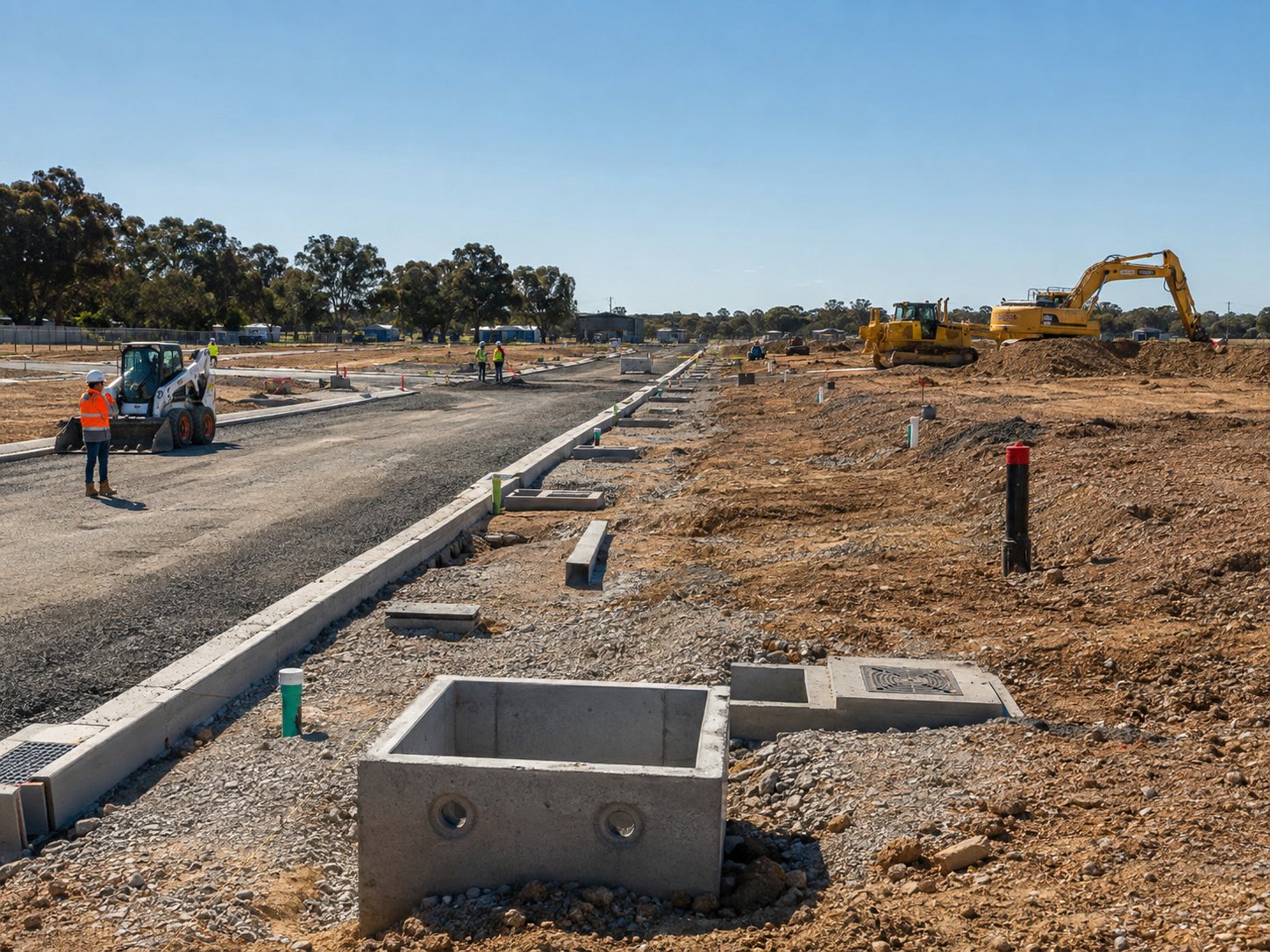
5. Civil construction
The contractor completes the approved works. The lender normally advances funds progressively against certified claims rather than paying the full facility upfront.
The quantity surveyor monitors the cost to complete and reports whether the remaining undrawn loan plus any remaining equity is sufficient to finish the approved scope.
6. Compliance, plan sealing or subdivision certification
After the works are completed, the relevant authority confirms that the subdivision conditions have been satisfied. The terminology and requirements vary by jurisdiction.
This stage may require:
as-constructed drawings;
engineering certifications;
service authority clearances;
payment of outstanding contributions and fees;
defect rectification;
execution of easements and covenants;
maintenance or performance bonds;
survey-plan approval; and
confirmation that all approval conditions have been met.
7. Registration of titles
The approved survey plan and supporting documents are lodged with the relevant land titles registry. New titles are created for the lots.
A project may be physically complete but unable to settle presales until registration occurs. The funding programme should therefore include a realistic allowance for the period between practical completion of civil works, authority sign-off and title registration.
8. Lot settlements and debt reduction
As lots settle, the lender receives the agreed release amount for each lot and releases its mortgage over that title.
The balance of the settlement proceeds may be used to pay selling costs, fund the next stage, retain working capital or distribute profit, subject to the facility terms.
What Costs Can Be Included in a Subdivision Facility?
The lender will generally work from an agreed total development cost budget. The budget should be complete and reconciled to the valuation, civil contract, quantity surveyor report and project programme.
Common cost categories include the following.
Land and acquisition costs
These may include the land purchase price, stamp duty, legal costs and acquisition fees. If the developer already owns the land, the lender will assess the current value, existing debt and the amount of recognised land equity.
Planning and consultant costs
Subdivision projects can involve town planners, surveyors, civil engineers, traffic engineers, environmental consultants, geotechnical engineers, landscape architects, project managers and legal advisers.
Civil works
Civil works may include demolition, clearing, bulk earthworks, retaining walls, roads, kerbs, drainage, sewer, water, electrical infrastructure, street lighting, telecommunications, footpaths and landscaping.
Authority charges and development contributions
Council contributions, infrastructure charges, utility connection fees and upgrade costs can be material. Their amount and payment timing should be confirmed rather than estimated as a broad allowance.
Sales and marketing
The feasibility should include agency commissions, project marketing, display costs, contract preparation, conveyancing and any buyer incentives.
Talk to BluCow about your project →
Finance costs
Finance costs may include interest, establishment fees, line fees, valuation fees, quantity surveying fees, legal costs, settlement costs, extension fees, unused-limit fees and discharge or exit costs.
Contingency
The contingency should reflect the certainty of the design, quality of the civil pricing, site conditions and project complexity. A low contingency is difficult to defend where earthworks quantities, rock, contamination, retaining structures or service upgrades remain uncertain.
Taxes and statutory costs
GST, land tax, council rates and other statutory charges should be modelled with advice from the appropriate tax and legal advisers. The treatment of GST and the timing of tax credits or payments can materially affect project cash flow.
Common Funding Structures for Subdivision Projects
Acquisition or land-bank finance
This facility funds the acquisition or refinance of a site before the subdivision is ready for construction funding.
The lender may apply a conservative loan-to-value ratio because the site is not yet fully approved or construction-ready. Interest may need to be serviced rather than capitalised, depending on the lender and the borrower's financial position.
Pre-development finance
Pre-development funding may cover planning, design, authority costs and other expenses required to move the project toward an approved, finance-ready position.
This capital is higher risk because repayment may depend on obtaining an approval, refinancing or selling the site. The lender will closely assess planning prospects, current land value, sponsor equity and the proposed exit.
Senior subdivision development facility
A senior facility funds approved civil works and related development costs. The lender holds first-ranking security and advances funds progressively.
The facility limit may be constrained by total development cost, the current or completed valuation, presales, the cost to complete and the lender's required risk margins.
Stretch senior finance
Stretch senior may provide a higher level of leverage through a single facility. It can reduce the amount of developer equity required or replace a separate mezzanine layer.
The higher leverage usually comes with higher pricing, tighter controls or minimum-return provisions. The project must retain enough margin and liquidity to support the structure.
Mezzanine finance
Mezzanine finance sits behind the senior lender and ahead of developer equity. It may be used where the senior facility does not fund enough of the total project cost.
The transaction normally requires an intercreditor arrangement and clear agreement about control, enforcement, distributions and repayment priority.
Preferred equity or joint-venture equity
An external investor may contribute part of the project equity in exchange for a priority return, profit share, governance rights or a combination of these.
This can reduce the developer's cash requirement, but the economic cost and control implications may be greater than debt.
Residual land or residual stock finance
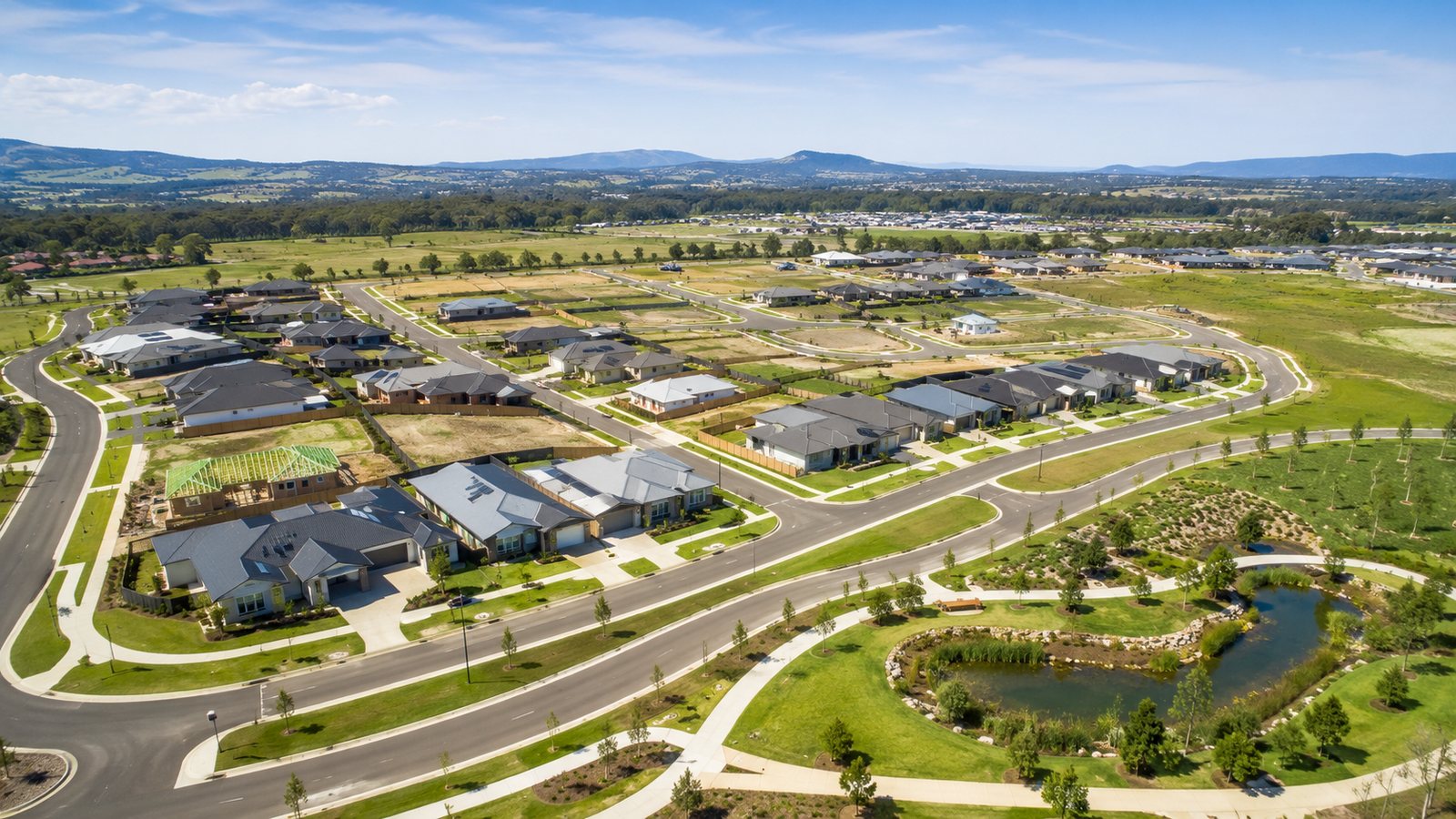
After the civil works and title creation are complete, unsold lots may be refinanced under a residual land or residual stock facility. This can repay the development loan and provide more time to sell the remaining lots.
The lender will focus on current titled-lot values, sales history, remaining debt, holding costs and the proposed sell-down period.
How Lenders Assess a Land Subdivision Project
Developer experience
The lender wants evidence that the developer and project team can manage approvals, civil construction, contractors, authorities, sales and staged cash flow.
Relevant experience is more persuasive than general property ownership. A developer who has completed similar subdivisions in comparable markets will generally present a stronger risk profile.
First-time developers may still obtain finance, but the lender may require:
a simpler project;
lower leverage;
additional equity;
stronger presales;
an experienced development manager;
a highly capable civil contractor; or
additional guarantees and risk controls.
Planning certainty
A fully approved project with detailed engineering and clear conditions is generally easier to finance than a project relying on an unapproved concept.
The lender will assess whether any approval conditions could materially change the scope, cost, lot yield or timing.
Site characteristics
The lender and valuer will examine access, topography, services, flood risk, contamination, geotechnical conditions, vegetation, easements and surrounding development.
A site that appears inexpensive may require substantial infrastructure or earthworks, reducing its true development value.
Development feasibility
The feasibility must include all project costs and use realistic lot values and settlement timing.
The lender will test:
cost increases;
lower sale prices;
slower sales;
delayed titles;
additional interest;
failed settlements;
reduced lot yield; and
the need for further equity.
Civil contract and contractor
The lender will review the contractor's experience, financial capacity, scope, exclusions, security, insurance, programme and pricing structure.
A lump-sum contract may reduce some pricing risk, but it does not eliminate variations, latent conditions, authority changes or scope gaps.
Valuation
The valuation may consider several values, including:
the current as-is value;
the value with planning approval;
the gross realisation value of the completed lots;
the value of each completed stage;
the value of the residual land after releases; and
the value of unsold titled lots.
The lender will also assess the valuer's adopted sales rate, selling period, discount rate, development costs and comparable evidence.
Equity contribution
The developer's equity may consist of cash, recognised land equity, sunk approved project costs or a combination of these.
The lender will confirm that the equity is genuine, available and contributed in the required order. Borrowed equity or undisclosed secondary debt may materially change the risk assessment.
“Fund the stage, not the whole estate.”
— The Australian Property Development Handbook
Sales and presales
Presales can demonstrate demand and provide a clear source of debt repayment. However, the lender will examine the quality of the contracts rather than relying only on the number sold.
Exit strategy
The primary exit may be progressive lot settlements. Secondary exits could include refinancing completed lots, selling a whole stage, selling the residual site or introducing another capital partner.
The lender will assess whether those alternatives are realistic under a downside scenario.
Key Financial Metrics in Subdivision Finance
Total development cost
Total development cost should include every cost required to acquire, approve, construct, market, finance and complete the subdivision.
A lender may exclude some developer fees, profit allowances or related-party charges from recognised costs when calculating leverage.
Gross realisation value
Gross realisation value is the total projected sale value of the completed lots before selling costs, finance costs and debt repayment.
The GRV should be supported by the independent valuation and current comparable sales.
Loan-to-cost ratio
Loan-to-cost compares the lender's facility or peak debt with the recognised total development cost.
Loan-to-cost = Loan amount divided by total development cost
The exact definition matters. Some calculations use the total approved facility, while others use peak debt. Some lenders exclude capitalised interest, fees or certain costs from the denominator.
Loan-to-value ratio
Loan-to-value compares the debt with an agreed property value. Depending on the stage of the project, this may be the current as-is value, approved-land value, completed stage value or gross realisation value.
Loan-to-value = Loan amount divided by the relevant valuation
A proposal may need to satisfy both an LTC limit and an LVR limit. The lower result often determines the practical facility amount.
Development profit and profit on cost
Development profit is the amount remaining after deducting total project costs from gross revenue.
Profit on cost = Development profit divided by total development cost
The lender uses project margin as a risk buffer. A project with a thin margin may become unviable after a modest cost increase or value reduction.
Interest cover and cost to complete
Subdivision facilities often capitalise interest, but the lender still needs confidence that the approved limit contains enough interest for the expected programme and reasonable delay.
At every drawdown, the remaining undrawn facility plus any unspent developer equity should be sufficient to complete the approved works and meet the remaining costs.
Sales coverage and debt coverage
The lender may assess the value of exchanged contracts relative to the debt, the percentage of lots sold, the expected debt repayment from each stage and the amount of unsold stock required to clear the facility.
These tests vary materially between lenders and projects.
How Presales Are Assessed
Presales are common in residential subdivisions, but not every lender requires the same level.
A lender may consider:
the number and value of contracts;
buyer deposits;
whether contracts are unconditional;
finance, due-diligence or sunset conditions;
the expected title and settlement date;
buyer concentration;
related-party or nominee purchases;
sales to builders compared with retail buyers;
contract prices compared with valuation evidence;
default and rescission rights;
the selling agent's track record; and
the rate of new sales and cancellations.
A contract with a small deposit and broad finance condition may provide less comfort than an unconditional contract with a meaningful deposit.
Presale practices also vary between markets. Contract structures accepted in one state or buyer segment may be viewed differently elsewhere. The finance submission should explain the local market practice rather than assume every lender will treat the contracts in the same way.
A project with limited presales may still be financeable where the developer has substantial equity, the location has strong demand, the stage is modest, the pricing is evidence-based and the lender is comfortable with the expected sales velocity.
How Progressive Drawdowns Work
Subdivision lenders normally release funds against completed work and verified project costs.
The common process is:
1. The civil contractor submits a progress claim.
2. The developer or project manager reviews the claim.
3. The lender's quantity surveyor inspects the works and confirms the value completed.
4. The quantity surveyor updates the cost-to-complete assessment.
5. The lender confirms that all drawdown conditions are satisfied.
6. The approved amount is paid to the borrower, contractor or project account.
The lender may require invoices, evidence of payment, statutory declarations, updated insurances, sales reports and confirmation that no material disputes or variations have arisen.
Equity-first, pari passu and reimbursement structures
Under an equity-first structure, the developer contributes the required equity before the lender begins funding project costs.
Under a pari passu structure, debt and equity may be contributed proportionately.
In some transactions, the lender reimburses recognised costs already paid by the developer after verifying them.
The order of funding has a major effect on liquidity. Developers should understand when their equity must be contributed and whether a working-capital buffer is required outside the formal project budget.
Staged Subdivision Finance
Large subdivisions are commonly divided into stages so that the developer does not need to fund the entire estate at once.
A staged structure can:
reduce peak debt and equity;
match construction with market demand;
generate earlier settlements;
recycle capital into later stages;
limit exposure to unsold inventory; and
allow later stages to be redesigned in response to market conditions.
However, staging creates additional finance questions.
Which land secures the facility?
The lender may take security over the entire parent site, including future stages, even if the first approved limit funds only Stage 1.
What infrastructure benefits later stages?
Stage 1 may include trunk roads, drainage, sewer or services required for the whole estate. These costs can make the first stage appear less profitable even though they create value for later stages.
The feasibility should allocate shared infrastructure consistently and explain how the lender and valuer have treated it.
When is the next stage funded?
The lender may require sales, settlements, debt-reduction targets, updated valuation evidence, additional approvals or credit approval before increasing the facility for the next stage.
A developer should not assume that successful completion of one stage automatically guarantees funding for the next.
Running your own numbers?
Open the feasibility calculators →Can surplus settlement proceeds be recycled?
Some facilities allow a portion of surplus proceeds from Stage 1 to fund Stage 2. Others require all settlement proceeds to reduce debt until the lender reaches an agreed position.
The ability to recycle proceeds can materially reduce the developer's equity requirement. It must be agreed in the facility documents rather than assumed in the feasibility.
How Lot Release Prices Work
The lender's mortgage must be released from an individual lot before that lot can settle.
The release price is the amount the lender requires from the settlement proceeds in exchange for releasing its security over that lot.
Release prices may be:
a fixed dollar amount for each lot;
a percentage of the gross sale price;
based on the valuer's adopted lot value;
calculated to maintain a required LVR over the remaining security; or
adjusted as the project progresses.
The release price is not always the same as the debt allocated to the lot.
For example, assume a lot sells for $700,000 and the agreed release amount is $455,000. After selling costs and adjustments, the remaining net proceeds may be available for project costs, later stages or developer distributions, subject to the facility terms.
If the release price is too high, the project may repay debt quickly but retain insufficient cash to complete the remaining works. If it is too low, the lender may be left with excessive debt against the residual land.
The release-price schedule should therefore be modelled lot by lot and stage by stage.
Developers should confirm:
whether the release amount is based on gross or net sale proceeds;
whether GST and selling costs are deducted before the calculation;
whether the lender can increase release prices;
how discounts or incentives affect the calculation;
how premium and lower-value lots are treated;
whether surplus proceeds can be redrawn or recycled; and
when developer profit may be distributed.
Planning, Certification and Title Risk
Subdivision finance is highly sensitive to the period between physical completion and title registration.
A project may have completed its civil works but still require authority clearances, defect rectification, survey-plan approval, execution of easements, payment of contributions and title-registry processing.
During this period:
interest continues to accrue;
presales cannot settle without titles;
the developer may need to maintain insurance and security;
buyers may become impatient or seek to exercise contractual rights; and
the facility maturity date may approach.
The development programme should include realistic time for certification and registration rather than treating title issue as immediate after the contractor leaves the site.
The developer should maintain a conditions register showing:
every approval condition;
the person responsible;
the evidence required for compliance;
the expected completion date;
any authority dependencies; and
the effect on plan sealing, certification or registration.
Civil Construction Risks
Earthworks and latent conditions
Unexpected rock, unsuitable material, groundwater, contamination or additional cut-and-fill can materially change the civil cost.
Geotechnical investigation, detailed design and appropriate contract allocation can reduce the risk but may not eliminate it.
Service authority upgrades
Existing water, sewer or electricity infrastructure may not have enough capacity for the proposed lots. The developer may need to fund upgrades beyond the immediate site.
These costs and approval timeframes should be confirmed early.
Weather and access
Heavy rain can delay earthworks, drainage and road construction. Remote or constrained sites may also experience access, haulage and material-supply issues.
Contractor capacity
The lowest tender is not always the lowest-risk option. The lender will consider whether the contractor has sufficient personnel, equipment, cash flow and experience to complete the project.
Variations and scope gaps
A contract may exclude authority fees, rock, dewatering, contaminated material, service relocations, retaining walls or landscaping. The feasibility and contingency must capture items outside the contract.
Defects and maintenance periods
Councils and service authorities may require defects bonds, maintenance bonds or rectification before final acceptance. The finance plan should allow for retained amounts and delayed release of security.
Major Risks in Land Subdivision Finance
Planning risk
Approval may be delayed, conditioned differently from the feasibility or refused. Lot yield may be reduced, or additional infrastructure may be required.
Valuation risk
The valuer may adopt lower lot prices, a slower selling period or higher development costs than the developer's feasibility.
Construction risk
Civil costs may increase through latent conditions, design changes, authority requirements, contractor failure or programme delay.
Market risk
Buyer demand may weaken, competing estates may discount, construction finance for end buyers may tighten or settlement rates may slow.
Presale risk
Contracts may contain conditions, low deposits or long sunset periods. Buyers may fail to settle or seek to rescind.
Title risk
Authority sign-off, plan sealing, subdivision certification or title registration may take longer than expected.
Funding risk
The facility may not include enough contingency or capitalised interest. The next stage may require new approval or additional equity.
Liquidity risk
Release prices, lender controls or delayed settlements may leave insufficient cash to pay remaining costs even when the overall project is profitable.
“Titles are the exit; everything before them is cost.”
— The Australian Property Development Handbook
Concentration risk
A large proportion of sales to one builder, investor group or related party may create settlement concentration.
Tax and legal risk
GST, the margin scheme, development agreements, option arrangements, easements, covenants and entity structures can materially affect cash flow and security. Specialist advice is essential.
Illustrative Example: Financing a 20-Lot Residential Subdivision
The following example is simplified and does not represent a current lender policy or an offer of finance.
Assume a developer proposes a 20-lot residential subdivision with the following feasibility:
land and acquisition costs: $4.20 million;
planning, design and consultants: $450,000;
civil works: $3.05 million;
authority charges and contributions: $850,000;
sales, marketing and legal costs: $500,000;
finance and professional costs: $850,000;
contingency: $400,000; and
total development cost: $10.30 million.
The independent valuation adopts an average completed lot value of $680,000, producing a gross realisation value of $13.60 million.
The projected development profit is:
$13.60 million minus $10.30 million = $3.30 million
The projected profit on cost is approximately:
$3.30 million divided by $10.30 million = 32.0 per cent
Assume an illustrative lender is prepared to provide the lower of:
66 per cent of recognised total development cost; and
55 per cent of gross realisation value.
The LTC limit is:
66 per cent multiplied by $10.30 million = $6.798 million
The GRV-based limit is:
55 per cent multiplied by $13.60 million = $7.480 million
The lower result produces an illustrative maximum facility of approximately $6.80 million.
The developer must therefore fund approximately $3.50 million of the recognised project cost, plus any excluded costs, working capital and overruns.
Assume the developer already owns the land, which is valued at $4.20 million and has an existing loan of $1.50 million. The net land equity is $2.70 million.
The developer may need to contribute a further $800,000 in cash to reach the required recognised equity, as well as maintain an additional liquidity buffer.
The lender may also require:
a satisfactory valuation;
approved civil plans;
an acceptable civil contract;
quantity surveyor sign-off;
evidence of the cash equity;
a minimum number or value of acceptable presales;
confirmation of authority charges;
an agreed release-price schedule; and
sufficient capitalised interest for the programme.
Assume eight lots are presold at an average of $680,000. The lender adopts a fixed release price of $450,000 per settled lot for the first ten settlements, subject to review.
Each settlement reduces debt, but the feasibility must also show whether the remaining net proceeds are sufficient to complete the works and carry the project until the final lots settle.
If title registration is delayed by three months, additional interest, rates and holding costs will reduce the contingency and profit. If two buyers fail to settle, the developer may need to remarket the lots while the loan remains outstanding.
This example demonstrates why facility size alone does not determine whether the structure works. The timing of equity, drawdowns, titles, settlements and release payments must all be modelled.
Small Subdivision vs Broadacre Estate
A two-lot subdivision may require less capital and fewer approvals, but the project can still be sensitive to a single service issue, planning condition or valuation shortfall.
A broadacre estate benefits from scale and staging, but usually introduces:
longer planning and delivery timeframes;
more complex infrastructure;
substantial upfront costs;
multiple approval authorities;
sales-rate risk;
stage-to-stage funding dependency; and
a need for sophisticated cash-flow management.
The appropriate lender for a small infill subdivision may not be the appropriate lender for a 200-lot estate. Lender selection should reflect project size, stage, location, leverage, presales, sponsor experience and required flexibility.

Documents Required for a Land Subdivision Finance Application
A complete submission commonly includes:
an executive project summary;
ownership and borrowing-entity details;
developer and project-team experience;
asset and liability statements;
evidence of available equity;
the contract of sale or current title documents;
planning approvals and conditions;
approved layout and staging plans;
operational works or detailed engineering approvals where applicable;
survey, geotechnical and environmental reports;
civil drawings and specifications;
the civil contract and tender comparison;
a detailed development feasibility;
monthly cash flow and drawdown forecast;
development programme;
independent valuation;
quantity surveyor report;
presale schedule and sample contracts;
market evidence and sales strategy;
authority contribution and service-cost evidence;
project management arrangements;
insurance details;
proposed exit strategy; and
downside sensitivity analysis.
The information should be consistent. Lot numbers, areas, sales values, stage descriptions, civil costs and programme dates should reconcile across the approval, valuation, feasibility, contract and funding request.
How to Improve the Chances of Securing Subdivision Finance
Complete due diligence before committing to the site
The most expensive subdivision problems often arise from issues that could have been identified before acquisition, including insufficient service capacity, flood constraints, poor access, unstable ground or unrealistic lot-yield assumptions.
Obtain clear approval and engineering information
A lender can assess a project more confidently when the approval pathway, conditions, civil scope and authority requirements are understood.
Use a detailed monthly cash flow
An annual feasibility is not enough. The lender needs to understand when each cost is paid, when debt is drawn, when titles are expected and when each lot settlement reduces the facility.
Model release prices before accepting the term sheet
The developer should calculate the net cash retained after every settlement and confirm that the project remains fully funded through completion.
Allow time for certification and title registration
The programme should not assume immediate settlement after physical works are completed.
Use realistic sales rates
A lender will compare the proposed absorption rate with competing projects, historic take-up and the depth of the buyer market.
Maintain additional liquidity
A development contingency in the feasibility does not always equal cash available to the developer. A separate liquidity buffer can help manage variations, delayed settlements and costs excluded from the facility.
Select the lender for execution, not only price
The lowest interest rate may not produce the best result if the lender cannot fund the required stage, imposes unworkable release prices, requires excessive presales or cannot meet the settlement timetable.
Address weaknesses directly
If the project has limited presales, a first-time developer, complex earthworks or a long title programme, the submission should explain the mitigation rather than ignore the issue.
Plan the next stage early
Funding for Stage 2 should be discussed before Stage 1 reaches completion. Updated approvals, valuations, sales evidence and credit approval may take time.
Questions to Ask Before Signing a Subdivision Finance Term Sheet
Developers should understand the following before accepting a proposal:
What is the maximum facility limit?
Is the limit based on total development cost, peak debt, current value or GRV?
Which project costs are recognised and which are excluded?
How much equity must be contributed?
When must the equity be spent?
Can land equity and sunk costs be recognised?
Is interest capitalised within the limit?
How much delay is included in the interest allowance?
Are presales required before settlement or first drawdown?
What conditions must presale contracts satisfy?
How are progress claims assessed and paid?
Who appoints and pays the quantity surveyor?
What contingency is required?
How are variations and cost overruns funded?
What is the release price for each lot?
Can release prices be changed?
Can surplus sale proceeds be recycled into the next stage?
When can the developer receive distributions?
Does funding for later stages require new credit approval?
What security is taken over future stages?
Are there minimum sales or settlement hurdles?
What happens if titles or settlements are delayed?
What extension options are available?
Are there extension fees, default interest or minimum-return provisions?
Can unsold completed lots be refinanced?
What events allow the lender to stop funding?
The term sheet should be translated into a complete project cash flow. This is the most reliable way to identify whether the facility is sufficient and commercially workable.
These principles come from our free guide.
Download the handbook →Frequently Asked Questions
How much can a developer borrow for a land subdivision?
The amount depends on the site's current and completed value, recognised total development cost, developer experience, planning status, civil contract, presales, market demand, equity and lender policy. Most proposals are constrained by more than one metric, such as LTC, LVR, cost to complete and sales coverage.
Can subdivision finance include the land purchase?
Yes. A facility may fund the acquisition and subsequent civil works, or the acquisition loan may later be refinanced into a development facility. The timing of approvals and the lender's appetite for pre-development risk will affect the structure.
Can land equity be used as the developer's contribution?
Often, yes. The lender may recognise the difference between the accepted land value and existing secured debt. Recognition depends on the valuation, acquisition history, lender policy and whether the equity is considered genuine and available.
Do subdivision lenders require presales?
Not always. Requirements vary by lender, project size, location, leverage, stage, developer strength and market evidence. Some projects can be funded with limited or no presales, while others require a specified level of acceptable contracts before drawdown.
What is a lot release price?
It is the amount paid to the lender from a lot settlement in exchange for releasing the lender's mortgage over that title. The calculation should be agreed before settlement and modelled across the whole project.
Can settlement proceeds fund the next stage?
Sometimes. The facility may allow surplus proceeds to be recycled after required debt reduction and costs are paid. Other lenders sweep all proceeds to debt until certain milestones are achieved.
What happens if civil costs increase?
The lender will normally require the developer to fund cost overruns unless the facility includes an available contingency and the lender approves its use. Material overruns can also cause the quantity surveyor to report a cost-to-complete shortfall, stopping further drawdowns until the shortfall is covered.
Why does the lender appoint a quantity surveyor?
The quantity surveyor independently reviews the budget, civil contract, progress claims, variations and remaining cost to complete. This helps the lender confirm that the project remains fully funded.
Can a first-time developer finance a subdivision?
Yes, but the lender may reduce leverage or require a stronger team, more equity, presales, an experienced development manager or a smaller and simpler project.
What is the difference between plan sealing and title registration?
The terminology differs by jurisdiction. Broadly, the relevant authority must first confirm that subdivision conditions have been satisfied and approve or certify the plan. The plan is then lodged with the land titles registry, which creates the new titles. Completion of the physical works does not automatically create titles.
Can untitled presales be used as the exit strategy?
Yes, subject to the lender accepting the contracts and the project completing the approvals, certification and registration required for settlement. The lender will consider contract conditions, deposits, buyer quality and the time remaining before contractual sunset dates.
Can unsold lots be refinanced after completion?
Potentially. A residual land or residual stock facility may refinance the development debt against completed titled lots. The lender will assess current values, sales history, remaining debt and the expected sell-down period.
Is the cheapest subdivision loan always the best option?
No. Facility size, conditions, drawdown timing, release prices, stage funding, presale requirements, extension options and lender execution capability can be more important than the headline interest rate.
Final Thoughts
Land subdivision finance must be structured around the full journey from the parent parcel to registered titles and completed lot settlements.
A lender will assess the developer, planning position, engineering, civil contract, valuation, presales, equity, feasibility and exit. However, the most important issue for the developer is often the timing of cash.
Civil works and authority charges may need to be paid well before titles are issued. Settlement proceeds may be heavily directed toward debt reduction. Later stages may require new approval. A delay between physical completion and title registration can consume interest and contingency.
For this reason, a subdivision facility should be assessed through a detailed monthly cash flow rather than the headline loan amount alone.
The developer should understand:
when equity is contributed;
how progress claims are funded;
how much interest is capitalised;
what triggers funding for each stage;
how release prices are calculated;
whether surplus proceeds can be recycled;
when developer distributions are permitted; and
how the facility responds to delays, overruns and failed settlements.
A well-structured facility supports the project through completion and preserves enough liquidity to deliver every stage. A poorly matched facility can place pressure on the project even when the underlying development remains profitable.
How BluCow Capital Can Help
We can help review the development feasibility, staging strategy, funding requirement, equity contribution, civil contract, presale position, release-price structure and exit before the project is presented to lenders.
For larger staged projects, we can compare how different facilities treat future stages, surplus sale proceeds, debt reduction and residual land. For smaller subdivisions, we can identify lenders suited to the project size, planning status and developer experience.
To discuss finance for an upcoming residential, industrial, commercial or rural-residential subdivision, contact BluCow Capital or submit an enquiry through blucowcapital.com.au.
Disclaimer
This article provides general information only and does not constitute financial, legal, tax, planning, investment or credit advice. Planning, certification, title-registration and development requirements differ between Australian states, territories and local authorities. Finance terms, leverage, presale requirements, release prices, security, fees and drawdown conditions vary between lenders and transactions. All examples are simplified and illustrative. Developers should obtain advice appropriate to their circumstances and have all approvals, contracts, tax arrangements, term sheets and facility documents independently reviewed before entering into a transaction.