

What changes the funding
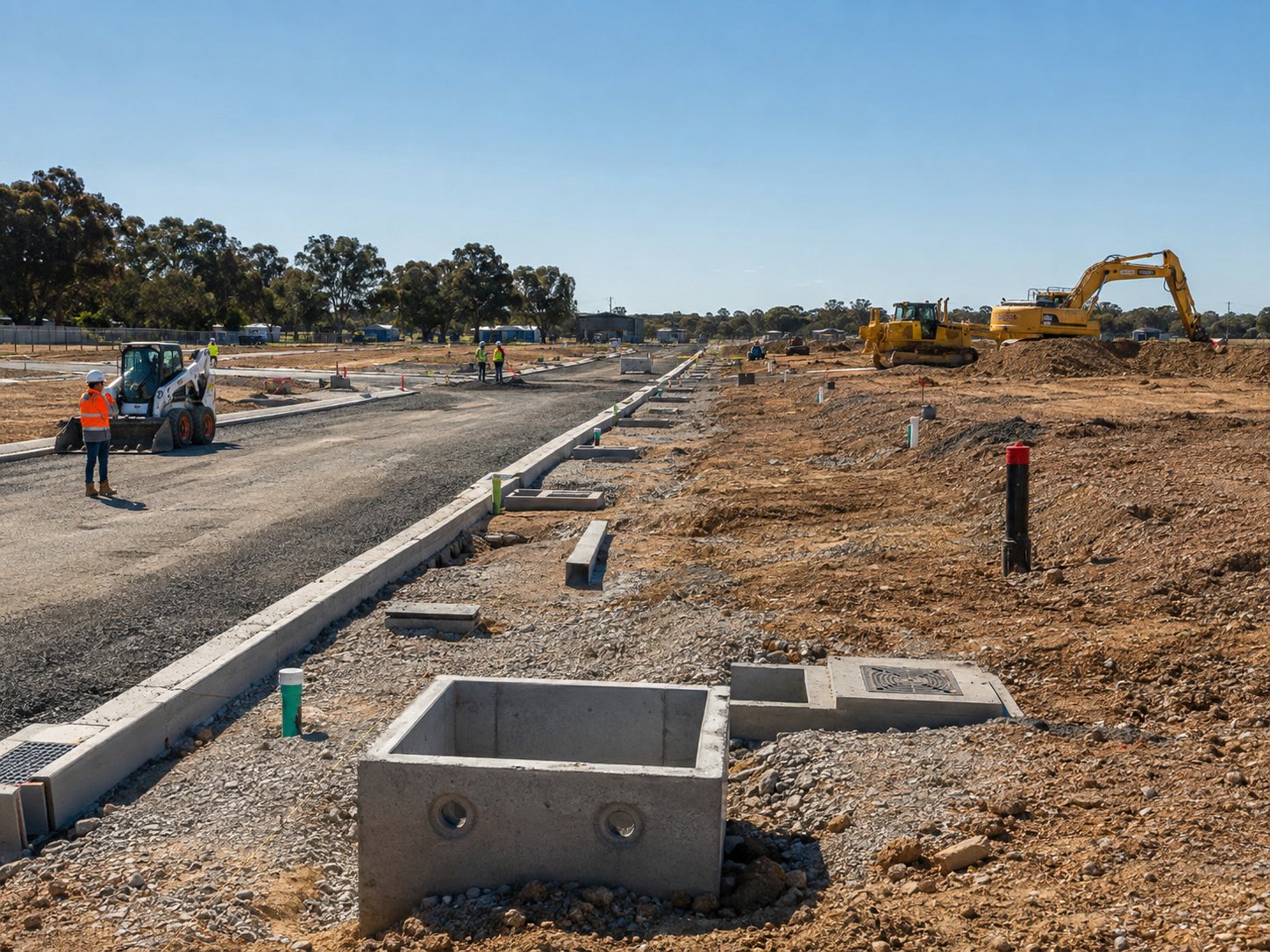
A subdivision is a sequencing exercise, not just a rate. The funding is built around stages — each phase sized to retire its own debt on registration and settlement — and around two levers that reduce the cash you contribute: planning uplift banked as soft equity, and a proceeds-release ladder that returns capital to you as group LVR reduces.
Recyclable stage facilities keep the next stage moving without re-underwriting from scratch, and balance-land debt can sit alongside to hold the remaining englobo.
| Facility type | Staged civil / land facilities, often recyclable |
|---|---|
| Equity lever | Planning uplift recognised as soft equity |
| Presales | Limited or none common on land-only stages (private credit) |
| Repaid by | Lot registrations and settlements, stage by stage |
Worked example
A staged residential subdivision with a $20.0m gross realisation. Civil-works facilities are typically senior-only, sized on the lower of an LVR and cost test and released stage by stage as titles register and lots settle.
| Layer | Amount | % of cost |
|---|---|---|
| Senior (civil) debt @ 9.00% | $8.59m | 62% |
| Developer equity | $5.27m | 38% |
| Total development cost | $13.86m | 100% |
| Gross realisation | $20.00m |
|---|---|
| Loan to value (LVR) | 43.0% |
| Loan to cost (LTC) | 62.0% |
| Cost of debt | 9.00% |
| Finance cost (interest) | $773,348 |
| Brokerage — BluCow (indic.) | $85,928 + GST |
| Development profit | $5.74m |
| Margin on cost | 41.4% |
| Return on equity | 109.0% |
| Equity multiple | 2.09x |
Illustrative only — actual leverage, pricing and returns depend on the lender, valuation, QS report and the specific project.
When it's the right structure
Subdivision finance suits developers turning englobo land into registered lots, especially where staging and a proceeds-release ladder can keep cash cycling into the next stage. It often precedes construction finance on the same landholding.
Advantages and limitations
Advantages: staged risk, recyclable facilities, and planning uplift that can reduce cash equity. Limitations: civil-cost and registration-timing risk, and sales-rate sensitivity that credit teams test hard.
Related services
- Property development finance (overview) →
- Apartment development finance →
- Townhouse development finance →
Frequently asked questions
Do I need presales to fund a land subdivision?
Land-only stages can often be funded with limited or no presales, particularly with private credit — each project is assessed on its own merits, sequencing and civil contractor. Where presales are required, arm's-length lot contracts with full deposits carry more weight than nominal holding deposits.
Can the planning uplift count as equity?
Frequently, yes. Where a rezoning or approval has lifted the land's value above its purchase price, that uplift can be recognised as soft equity in the capital stack, reducing the cash you need to contribute — subject to a supporting valuation.
How does staged, recyclable funding work?
A stage facility funds Stage 1 civils; as lots register and settle, proceeds retire that debt and the facility is recycled into the next stage. A negotiated proceeds-release ladder can return a rising share of each settlement to you as the group's overall LVR falls.