

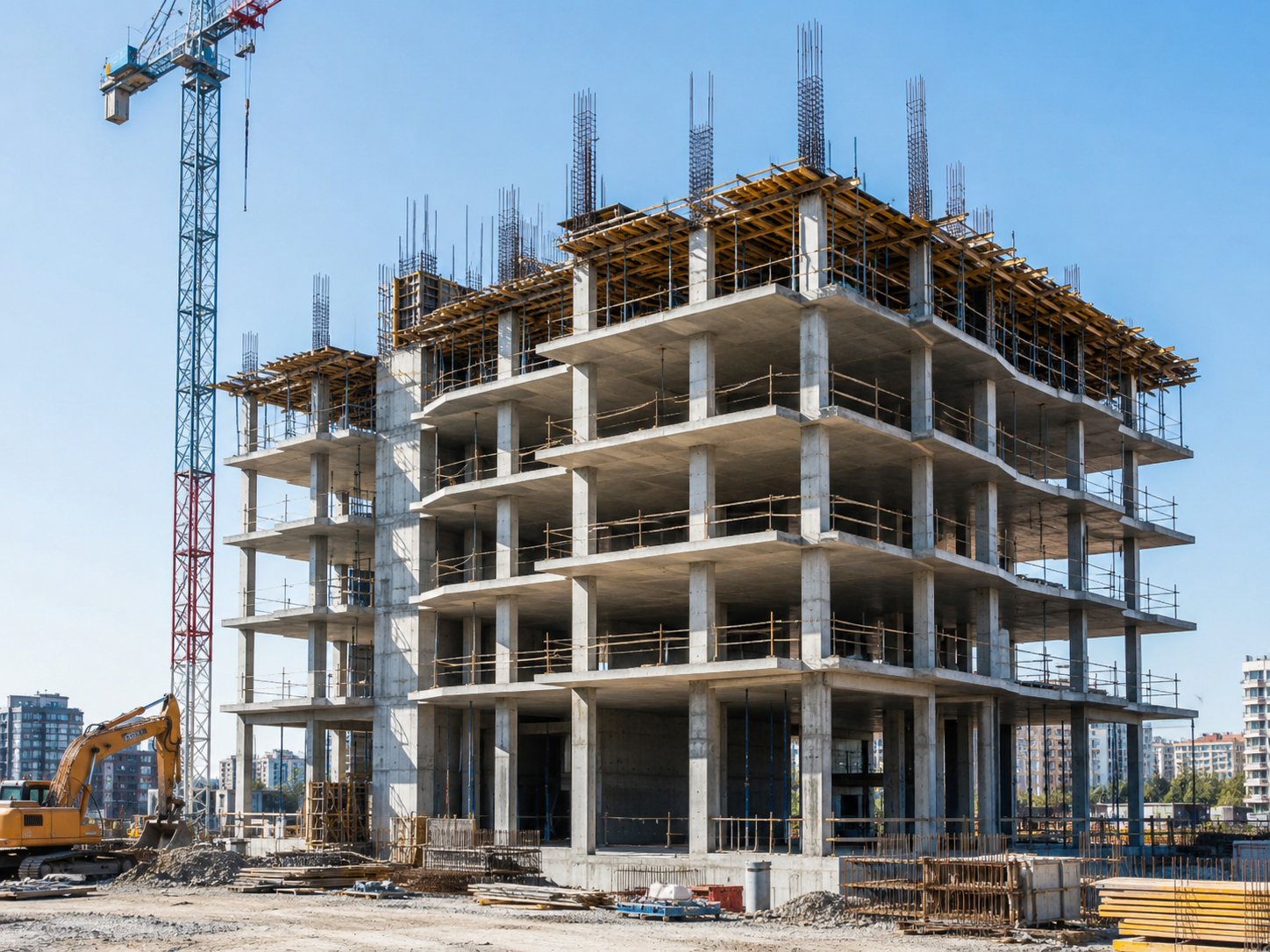
What is property development finance?
Property development finance is funding used to acquire a site and construct a project — residential, commercial or mixed-use — where the debt is repaid from sales or a refinance on completion rather than from ongoing income. It is assessed on the finished project: what it will cost to build, what it will be worth, and how confidently the lender can see its money coming back.
Unlike a standard property loan, a development facility is drawn progressively against construction milestones, carries its own leverage tests, and usually sits alongside other layers of capital, each structured to a different point in the deal.
Where it sits: the capital stack
A development is rarely funded by a single loan. Capital is layered by risk and priority of repayment. Senior debt sits at the base — first to be repaid, lowest cost. Each layer above takes more risk and prices higher, ending with the developer's own equity, which is last to be repaid and first to absorb loss.
- Senior debt — first-mortgage construction funding; the largest, cheapest layer.
- Stretch senior — senior debt pushed to a higher leverage point to reduce the capital needed above it.
- Mezzanine finance — subordinated debt that lifts total leverage and preserves the developer's cash.
- Preferred equity — capital with a priority return that fills a residual gap.
- Developer's equity — your own contribution at the top of the stack.
How lenders assess a development
A credit team reads a deal through a consistent set of questions. A strong submission answers them before they are asked:
| Leverage — LVR | Loan measured against gross realisation or end value. Governs how much debt the project value supports. |
|---|---|
| Leverage — LTC | Loan measured against total development cost. The lower of LVR and LTC usually sets the facility limit. |
| Security | Registered first mortgage over the site, general security agreement, guarantees, and often assignment of contracts and insurances. |
| Presales | Qualifying presales may be required to cover a target proportion of the debt, evidencing demand and supporting the exit. |
| Builder & contract | Fixed-price building contract, builder capability and financial standing, and adequate contingency. |
| Debt exit | How and when the facility is repaid — sales rate, settlement risk, or a residual stock refinance. |
| Developer experience | Track record of comparable projects delivered. Weaker experience is manageable but shapes leverage and pricing. |
We package each transaction the way a valuer and credit committee will test it — reconciling the feasibility, stress-testing the assumptions and pre-empting the questions — so the submission arrives credit-ready rather than as a starting point for negotiation.
Worked example
The same reference deal runs across all our capital-stack pages: a 24-apartment project with an $18.0m end value and a $12.5m cost base (land, build, consultants and contingency, before finance). Here is how it looks funded across the full stack — senior, mezzanine and equity together. Each layer above senior takes more risk and prices higher; the art is fitting them so the blended cost still leaves the margin intact.
| Layer | Amount | % of cost |
|---|---|---|
| Senior debt @ 8.50% | $8.13m | 60% |
| Mezzanine @ 16.00% | $1.63m | 12% |
| Developer equity | $3.79m | 28% |
| Total development cost | $13.55m | 100% |
| End value (GRV) | $18.00m |
|---|---|
| Loan to value (LVR) | 54.2% |
| Loan to cost (LTC) | 72.0% |
| Blended cost of debt | 9.75% |
| Finance cost (interest) | $951,116 |
| Brokerage — BluCow (indic.) | $97,550 + GST |
| Development profit | $4.09m |
| Margin on cost | 30.2% |
| Return on equity | 107.8% |
| Equity multiple | 2.08x |
Illustrative only — a single $18.0m reference deal is used across our capital-stack pages so you can compare structures like-for-like. Actual figures depend on the lender, valuation, QS report and the deal.
Documents required
A credit-ready submission generally assembles:
- Development feasibility and cost plan
- Development approval / planning consents
- Fixed-price building contract and builder profile
- Presale contracts schedule (where applicable)
- Site details, contract of sale or title
- Developer CV and financial position
- Independent valuation and quantity surveyor report (lender-ordered)
Related services
Frequently asked questions
How much equity do I need?
Most senior lenders expect the developer to contribute the balance of total cost not covered by debt — commonly around 20–40% depending on lender, project and presales. Mezzanine or preferred equity can reduce the cash required.
What is the difference between LVR and LTC?
LVR measures the loan against value or gross realisation; LTC measures it against total project cost. Lenders test both, and the lower resulting loan usually governs the facility.
Do I need presales?
It depends on the lender and structure. Banks often require qualifying presales; some non-bank and private lenders offer reduced- or no-presale finance at higher cost. See no-presale finance.
How long does approval take?
A well-prepared submission can reach conditional terms within days to a couple of weeks, with formal approval following valuation, QS review and legals. Incomplete submissions are the main cause of delay.